Are you a beginner looking for an effective yet quick way to train your legs without going to the gym? This 15-minute leg workout at home with dumbbells is designed specifically for beginners, women, and busy people who want practical results.
In my 10+ years as a fitness coach and certified nutritionist, I have helped many clients worldwide build stronger legs, improve daily movement, and feel more confident using short home routines like this one. This workout uses simple dumbbell exercises that target your quads, hamstrings, glutes, and calves through compound movements.
According to research published in the Journal of Strength and Conditioning Research, both squats and deadlift variations can lead to improvements in lower body strength and power when performed with proper technique. Another study highlighted that resistance training involving large muscle groups can increase post-exercise energy expenditure (EPOC), which may support overall calorie burn.
This routine is beginner-friendly, scalable, and requires minimal equipment. You can do it in your living room in just 15 minutes. Many of my clients have reported feeling stronger and moving better after consistently following similar short sessions. Remember, individual results vary based on consistency, nutrition, and starting fitness level.
Let’s walk through everything step by step so you can start safely and effectively today.
Why This 15-Minute Leg Workout at Home with Dumbbells Can Be Helpful
Short, focused leg workouts can be a practical addition to a busy lifestyle. Training the lower body, which contains large muscle groups, may support overall strength, balance, and daily function.
Studies, including those comparing squat and deadlift training, suggest that compound lower-body exercises can contribute to improvements in strength and functional performance. Resistance training has also been associated with potential metabolic benefits through increased energy use during and after sessions.
For beginners and women, this type of workout offers a balanced approach that emphasizes controlled movements and proper form. One client I worked with—a busy teacher—found that adding short leg sessions helped her feel more stable during everyday activities like climbing stairs. Experiences like this show how consistent, simple training can make a difference over time.
The use of dumbbells allows gradual progression, making the workout suitable as you build confidence and strength.
Key Benefits Many People Notice
Here are some common reasons people include leg training in their routine:
- May support better lower body strength and functional movement
- Can contribute to improved posture and balance when done regularly
- Helps build foundational muscle that supports daily activities
- Provides a time-efficient option for busy schedules
- Allows progressive overload with adjustable dumbbell weights
American Council on Exercise (ACE) resources often highlight glute-focused movements like bridges for strengthening the posterior chain and supporting stability.
Keep in mind that results depend on many factors, including consistency, recovery, and overall lifestyle. This workout is one tool that may help you move toward your goals.
What You Need for This Workout
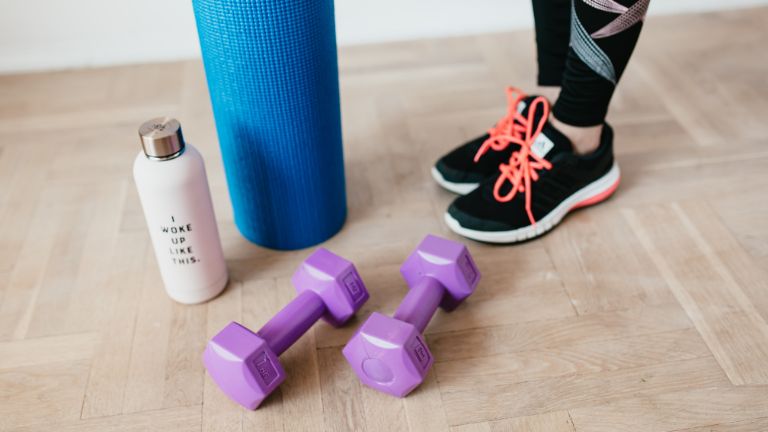
- A pair of dumbbells (start light — beginners can use 2–5 kg or water bottles)
- Comfortable clothes and supportive shoes
- Optional: yoga mat for floor exercises
- Enough space to move safely (about 2×2 meters)
If you don’t have dumbbells yet, begin with bodyweight versions and add resistance later.
2-Minute Warm-Up (Important for Safety)
Always start with a short warm-up to prepare your muscles and joints.
- March in place with high knees—30 seconds
- Bodyweight squats — 10 slow repetitions
- Leg swings (hold a wall for balance) — 10 per leg
- Ankle circles—10 circles each direction per foot
This helps increase blood flow and reduces the chance of strain.
The 15-Minute Dumbbell Leg Workout Routine
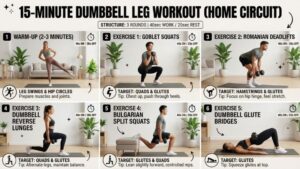
Perform this as a circuit: Do each exercise for about 45 seconds or 10–12 controlled repetitions. Rest 15–20 seconds between exercises. Complete 3 full rounds. Total time is roughly 15 minutes.
Focus on good form rather than speed. Stop immediately if you feel any sharp pain (distinct from normal muscle effort) and consult a professional if needed.
This routine is based on my coaching experience with hundreds of beginners and practical methods refined over 10+ years.
1. Dumbbell Goblet Squat
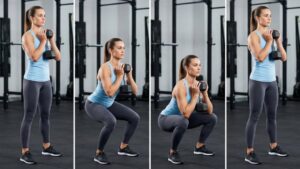
Hold one dumbbell vertically at your chest. Feet shoulder-width apart, toes slightly turned out. Lower by pushing hips back and bending knees until thighs are roughly parallel to the floor (or as far as comfortable with good form). Keep your chest up and back neutral. Push through heels to return to a standing position.
This movement targets the front of the legs and glutes. Research on squat variations shows they can be effective for building lower body strength when form is prioritized.
Beginner tip: Reduce depth if needed. Breathe in as you lower and out as you rise.
Modification: Perform without weight initially.
2. Dumbbell Romanian Deadlift
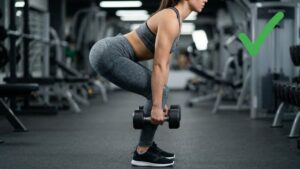
Hold dumbbells in front of thighs, feet hip-width apart. Slight knee bend. Hinge at the hips, push hips back while lowering weights toward shins, keeping the back flat. Feel a stretch in the back of the legs, then squeeze glutes to stand tall.
This exercise focuses on the hamstrings and glutes. Studies on deadlift variations indicate they can help strengthen the posterior chain with controlled technique.
Tip: Keep the back neutral — avoid rounding. Start with a smaller range of motion if hamstrings feel tight.
3. Dumbbell Reverse Lunges
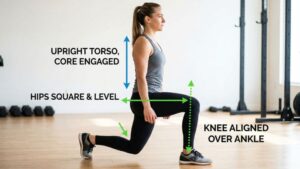
Hold dumbbells at sides. Step one foot back and lower until both knees are at approximately 90 degrees (or a comfortable range). The front knee stays over the ankle. Push through the front heel to return, then switch legs.
Unilateral work like this may help address strength differences between legs and support balance.
Tip: Keep the core engaged for stability. Beginners can try bodyweight first.
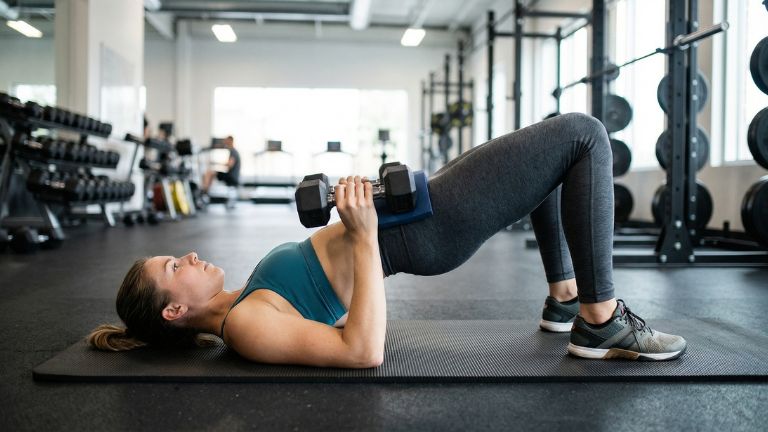
4. Dumbbell Glute Bridge
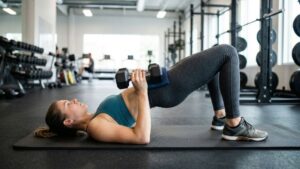
Lie on your back, knees bent, feet flat. Place one dumbbell on your hips. Lift hips toward ceiling while squeezing glutes at the top, then lower with control.
ACE exercise resources often recommend glute bridges for activating and strengthening the glutes and improving hip stability.
Tip: Pause briefly at the top for better engagement.
5. Dumbbell Calf Raises
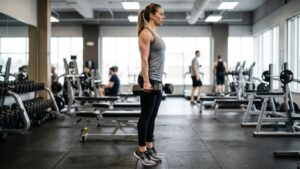
Stand tall, holding dumbbells at your sides. Rise onto your toes, squeeze calves at the top, then lower slowly.
This finishes the workout by targeting the lower leg muscles.
Tip: Perform slowly for better control.
Practical Tips for Better Results and Safety
- Prioritize controlled movement and proper alignment over heavy weights.
- Progress gradually by increasing weight or repetitions when the current level feels manageable.
- Combine with balanced nutrition and adequate rest for overall progress.
- For women and beginners: Focus on learning form first—many clients improved confidence quickly this way.
This workout was created based on my personal coaching experience with clients and practical training methods used over 10+ years.
Supporting Your Progress with Nutrition
Pairing movement with sensible eating can help. Include protein sources (such as eggs, lentils, paneer, or lean meats) and stay hydrated. Many people find that consistent habits in both training and nutrition support their energy and recovery.
Common Mistakes to Watch For
- Rounding the back during hinge movements
- Letting knees collapse inward during squats or lunges
- Using momentum instead of muscle control
- Ignoring warning signs of discomfort
Stop if you feel sharp pain and consider guidance from a qualified professional.
FAQ About the 15 Minute Leg Workout at Home with Dumbbells
1. Is this suitable for complete beginners?
Yes. Start with lighter weights or bodyweight, focus on form, and build gradually.
2. How often should I do this workout?
3–4 times per week with rest days in between is a common approach for many beginners.
3. Can I do it without dumbbells?
Yes. Master the bodyweight version first, then add light resistance as you improve.
4. Will this reduce fat in my thighs?
Targeted exercises build muscle and may support overall body composition changes when combined with a balanced diet and calorie management. Spot reduction is limited.
5. What if I have knee concerns?
Many find these movements manageable with proper form and reduced range. Always consult your doctor or physiotherapist before starting if you have existing conditions.
6. When might I notice changes?
Strength and movement improvements can appear within a few weeks for some people, while visible changes in muscle tone usually take longer and depend on multiple lifestyle factors.
Conclusion: Try This Beginner Leg Workout Today
This 15-minute dumbbell leg workout at home offers a straightforward, practical way for beginners to start building lower body strength and confidence.
Start at your own pace, focus on learning the movements safely, and stay consistent. Small daily improvements add up over time.
For more beginner-friendly options, check out our 15 Minute Full Body Workout at Home or simple nutrition tips for active lifestyles.
You are capable of making progress — begin today and listen to your body as you go.
Stay consistent and kind to yourself on this journey.
About the Author
Ashan Ali is a certified fitness coach and nutritionist with over 10 years of hands-on experience helping beginners, women, and busy individuals worldwide improve their strength and health through practical home workouts. His approach emphasizes safe form, realistic goals, and sustainable habits. This article is based on his personal coaching experience with clients and practical training methods used over 10+ years.
Important: This is general information only. Consult your healthcare provider before beginning any new exercise program, especially if you have health concerns or injuries. Stop immediately if you feel sharp pain.