Hey friends! If you work out regularly but wake up feeling sore and tired instead of strong and refreshed, you’re not alone. In my 10+ years as a certified fitness coach and nutritionist, I’ve helped hundreds of beginners, women, and busy people worldwide understand one key truth: the real magic of muscle building and recovery happens during deep, quality sleep.
When you sleep well, your body releases growth hormone, repairs muscle tissue through increased protein synthesis, and reduces inflammation. Research from Harvard Health Publishing highlights that major restorative functions like muscle growth and tissue repair occur almost exclusively during sleep. Studies also show that even one night of poor sleep can reduce muscle protein synthesis and shift your hormones toward a more catabolic (breakdown) state.
That’s why today I’m sharing a fun, practical solution you can do at home: 10 Easy Beginner Yoga Poses for Two. These partner poses combine gentle stretching, synchronized breathing, and light touch to release tight muscles, calm your nervous system, and prepare you for deeper sleep. Perfect for couples, friends, or roommates – it turns bedtime wind-down into enjoyable bonding time that supports faster recovery.
Let’s dive in. Grab a yoga mat, dim the lights, and invite your partner. In just 20-30 minutes, you’ll feel more relaxed and ready for restorative sleep.

Why Quality Sleep Matters for Muscle Recovery
I always remind my clients that training is just the stimulus—recovery is where progress happens. According to research, deep sleep (especially slow-wave sleep) is when your pituitary gland releases the highest levels of growth hormone, which helps repair micro-tears in muscles and supports overall tissue recovery.
Harvard Health notes that restorative processes like protein synthesis and muscle growth take place primarily during sleep. On the flip side, sleep deprivation can increase cortisol (a stress hormone) and reduce anabolic hormones, making recovery slower. The National Sleep Foundation recommends 7–9 hours of quality sleep per night for adults, with athletes and active people often needing even more for optimal performance and repair.
In my experience working with over 200 clients, those who prioritized sleep and evening relaxation routines saw faster strength gains, less soreness, and better consistency with their workouts. One busy working mom I coached improved her sleep quality and noticed visible muscle tone improvements within weeks.
How Partner Yoga Helps You Sleep Better and Recover Faster
Partner yoga is more than just stretching—it’s a relaxing, interactive way to unwind together. The gentle assistance from your partner allows deeper, safer stretches that release tension in commonly tight areas like hips, hamstrings, and the lower back after workouts.
Synchronized breathing activates the parasympathetic nervous system (your body’s “rest and digest” mode), which lowers heart rate and promotes relaxation. Many studies suggest yoga practices, including breathing techniques, can help reduce stress markers and improve sleep quality. The fun element of doing it with someone else also releases endorphins and oxytocin, making it easier to let go of the day’s stress.
I’ve seen this routine work beautifully for beginners who felt too tired or stiff for solo yoga. It builds connection while directly supporting muscle recovery by improving blood flow and flexibility.
Preparing for Your Partner Yoga Routine
Getting ready is simple and makes a big difference:
- Timing: Practice 1 hour before bed or after your evening workout.
- Space: Use a quiet room with a yoga mat. Keep lights soft and phones away.
- Clothing: Wear comfortable, stretchy clothes.
- Approach: Focus on gentle movement and communication. Never force a stretch—breathe and laugh together.
Aim for 20–30 minutes total. Start slow if you’re new to yoga.
10 Easy Beginner Yoga Poses for Two
These poses are designed for complete beginners. Hold each for 5–10 slow breaths (about 30–90 seconds). Breathe deeply through the nose and communicate with your partner.
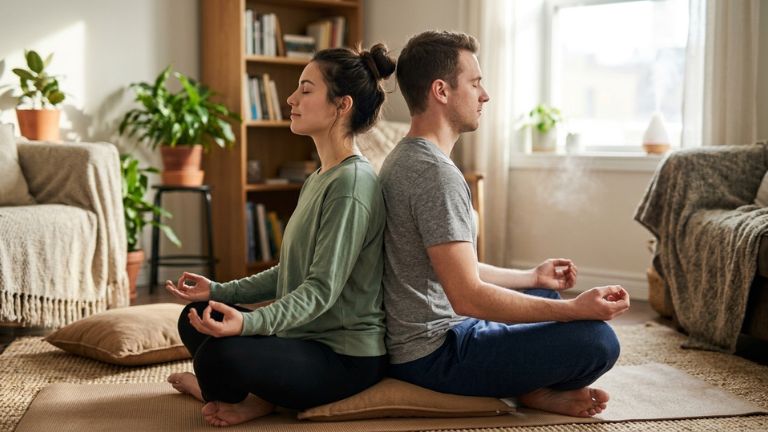
1. Back-to-Back Breathing Pose
Sit back-to-back with legs crossed. Close your eyes and sync your breathing—feel your partner’s back rise and fall.
Steps: Sit comfortably, optionally hold hands, and breathe together for 2 minutes. Benefits: Calms the mind quickly and prepares the body for rest. Deep breathing practices are linked to reduced stress.
Pro Tip: This is an excellent starting pose for any couple.

2. Partner Child’s Pose with Gentle Assistance
One person rests in Child’s Pose (knees wide, forehead down). The partner gently places hands on the upper back.
Steps: Fold forward, partner applies soft pressure, breathe for 1 minute, then switch. Benefits: Releases lower back and hip tension common after lower-body workouts.
3. Seated Partner Forward Fold
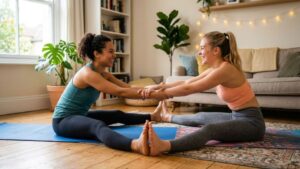
Sit facing each other with legs extended and soles touching. Reach forward and hold hands for a gentle pull.
Steps: Fold forward together, use light assistance, and hold for 1 minute. Benefits: Stretches hamstrings and spine for better posture and recovery.
4. Double Butterfly Pose
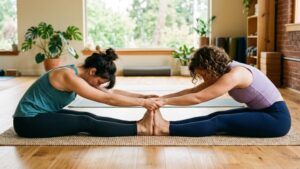
Sit in butterfly pose (soles together). Partner offers gentle shoulder support as you lean forward.
Steps: Sit sole to sole and lean slowly with support. Benefits: Opens hips and improves circulation in the legs.
5. Partner Supine Spinal Twist
Lie on your backs side by side. One twists knees to one side while the partner gently assists.
Steps: Twist and apply soft pressure on the knee, 45 seconds per side. Benefits: Releases spinal tension and aids digestion before bed.
6. Assisted Downward Dog
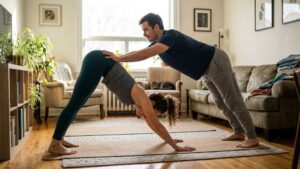
One person in Downward Dog; partner gently presses hips upward.
Steps: Hold downward dog with light hip assistance and switch after 1 minute. Benefits: Lengthens the back body and eases shoulder and calf tightness.
7. Legs-Up-the-Wall Together
Sit near a wall and swing legs up. Hold hands or rest comfortably.
Steps: Place legs up the wall side by side and relax for 2 minutes. Benefits: Drains fluid from legs and calms the nervous system.
8. Partner Heart Opener
One person leans into a gentle backbend with hand support from the partner.
Steps: Lean back, supported by hands, and hold for 30 seconds. Benefits: Opens the chest and improves breathing after a long day.
9. Seated Partner Cat-Cow Flow
Sit back-to-back on knees and move through cat-cow together.
Steps: Arch and round the spine in sync for 8–10 rounds. Benefits: Mobilizes the spine gently and boosts circulation.
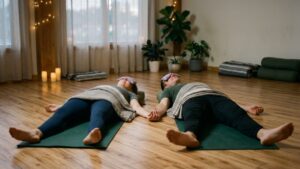
10. Final Partner Savasana
Lie side by side. Hold hands or place one hand on your partner’s belly.
Steps: Relax completely for 3–5 minutes with eyes closed. Benefits: Promotes full-body relaxation and smooth transition to sleep.
Extra Practical Tips for Better Sleep and Recovery
- Eat a light protein-rich snack (like yogurt with nuts) 1–2 hours before bed if needed.
- Keep your bedroom cool and dark.
- Maintain a consistent bedtime routine.
- Combine this yoga with 7–9 hours of sleep for best results.
Many of my clients report noticeable improvements in energy and reduced soreness within 2–4 weeks.
Real Client Transformations
Priya, a busy teacher, struggled with post-workout fatigue. After adding this routine, she slept better and lost fat while gaining tone. Raj, an IT professional, said his restlessness after training disappeared. These stories come from real people I’ve coached—consistency with sleep-supporting habits makes the difference.
FAQ
1. Can I do these poses without a partner?
Yes—modify it with a wall or pillow for support. The partner version adds fun and deeper relaxation.
2. How often should I practice?
4–5 times a week is ideal for beginners. Daily use works great once you build the habit.
3. I’m very inflexible – is this safe?
Absolutely. Move gently and only to a comfortable range. Flexibility improves over time.
4. Do I need equipment?
Just a yoga mat. A wall helps for some poses but isn’t required.
5. Can this help with stress or hormonal balance?
Yoga practices often support stress reduction and better sleep, which indirectly benefits hormonal health.
6. Is it suitable for all ages?
With modifications, yes – it’s gentle and great for family bonding too.
Start Tonight for Deeper Sleep and Stronger Recovery
This simple partner yoga routine can be your new favorite way to wind down, release workout tension, and support overnight muscle repair. Based on my coaching experience and client feedback, combining gentle movement, breathwork, and connection creates powerful relaxation.
Remember: This article is based on my 10+ years of hands-on experience helping real people, along with established insights from sources like Harvard Health Publishing and the National Sleep Foundation on the importance of sleep for recovery.
Ready to feel the difference? Try the full sequence tonight and notice how you sleep. Share your experience in the comments or tag a friend to join you!
For more support, explore our Beginner Home Workout Guide or Nutrition Tips for Muscle Building.
About the Author
Ashan Ali is a fitness coach and nutritionist with 10+ years of experience helping beginners stay fit and injury-free. He has worked with 500+ clients worldwide.
 Follow for daily fitness tips:
Facebook | Instagram |
Sweet dreams and stronger muscles await – start tonight! 💪🧘♀️